How to check a mob of livestock before you buy
Checking a mob before you buy means more than walking the fence line and counting heads by eye. A paddock glance or a photo in a catalogue only tells you roughly how many animals are there and what they look like; it cannot show you whether the tags match the paperwork or whether the seller actually owns the stock. Industry guidance in Australia says the buyer or receiver is normally the one responsible for recording the NLIS transfer of purchased stock (Integrity Systems Company n.d.a), and in South Dakota, livestock "sold at livestock markets in western SD are inspected for ownership when they arrive at the markets" and "livestock sold privately must also have ownership inspections" (South Dakota Brand Board 2025).
Why isn't a paddock count or a photo count enough?
Seeing a mob in a paddock, or looking at photos in an online catalogue, answers one question: roughly how many animals are there and what do they look like. It does not answer the questions that matter once money changes hands.
AuctionsPlus listings are built this way. An accredited assessor visits the vendor's property before the sale and "enters a description of the cattle including photos into a computer-based catalogue" so buyers anywhere in the country can bid without seeing the stock in person (FutureBeef 2026). That is useful for judging type and condition, but a catalogue description is not a count through a gate, and it is not the paperwork that proves the seller can legally sell the animals.
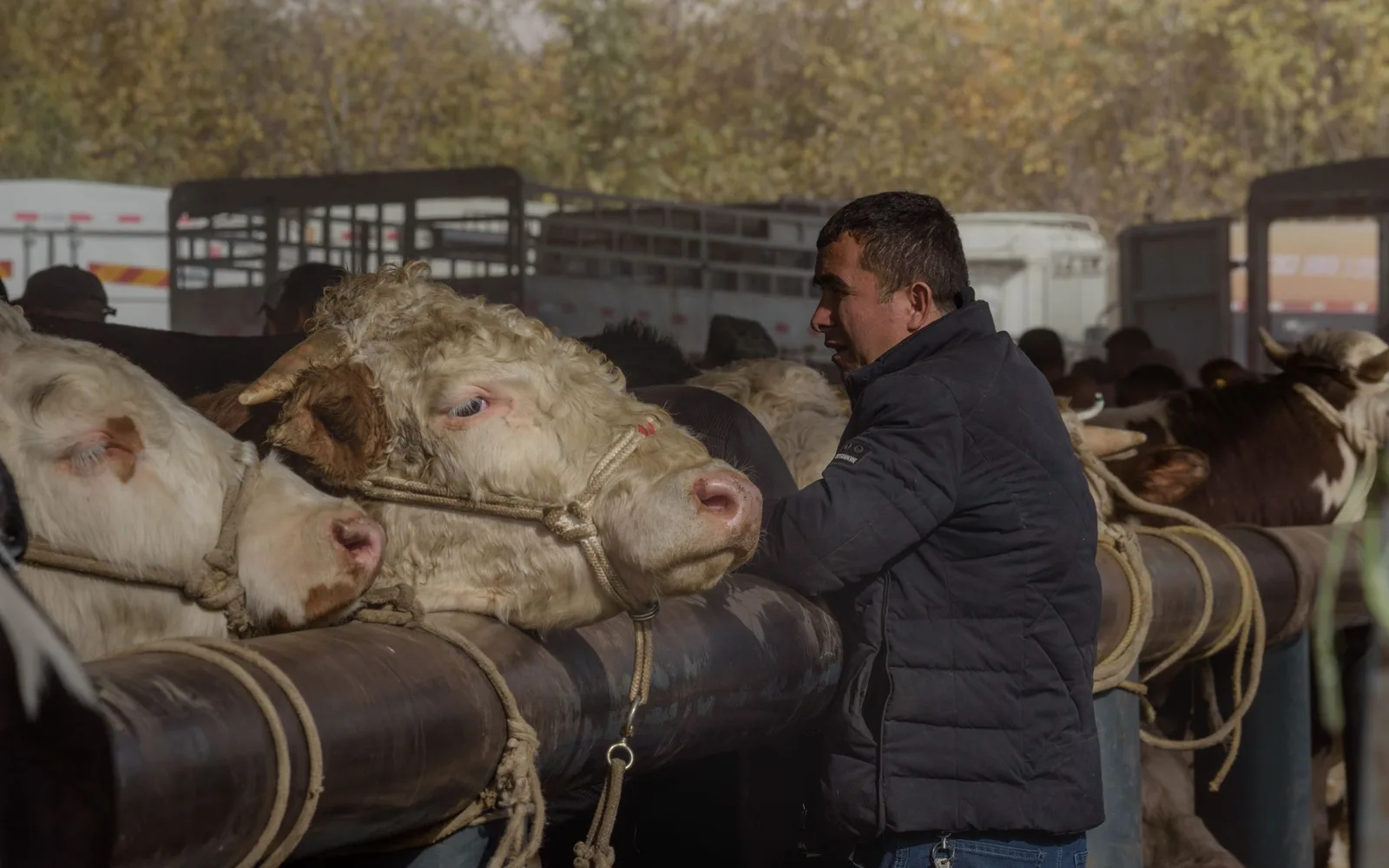
Paddock sales have the same gap. In a paddock sale, "stock are inspected on the vendor's property by the buyer and are sold straight out of the paddock" on a per head or per kilogram basis (FutureBeef 2026). Walking the paddock lets a buyer judge condition and type, but a mob in open country is hard to count accurately by eye, since animals bunch, move and hide behind each other and behind rises in the ground. Our guide to how to count cattle explains why a race or gateway count beats a paddock count; the same gap applies here, a quick look across a mob before a sale is not a verified tally.
What should a buyer check at a saleyard?
Saleyards carry extra identification obligations a private paddock sale does not. In Queensland, "all cattle, buffalo, bison, sheep, goats and pigs must be identified with an NLIS device before arriving at a saleyard", and any animal that turns up without one must be reported to a biosecurity inspector within 24 hours and fitted with a saleyard device before it leaves (Queensland Department of Agriculture and Fisheries 2026). The saleyard operator, not the buyer or vendor, reports the sale to the NLIS database, and keeps a copy of the movement record for five years (Queensland Department of Agriculture and Fisheries 2026).
That does not mean a buyer has nothing to check. Integrity Systems Company (ISC), which runs Australia's National Livestock Identification System (NLIS) and Livestock Production Assurance (LPA) program, says that "if livestock are bought, sold or moved through a saleyard, the livestock movement must be recorded by the saleyard", but for a private sale "the buyer/receiver of the livestock must record the livestock movement" themselves (Integrity Systems Company n.d.a). ISC adds that it is "good practice to check all movement records to and from your PIC on the NLIS database" to confirm "the 'from' and 'to' PICs and the total number of livestock transferred" (Integrity Systems Company n.d.a).
If an agent handles the purchase, ISC recommends asking "who will do it when the sale is made", and if the agent completes the transfer, asking "for the Upload ID as a receipt to show it has been done" (Integrity Systems Company n.d.a).
What does the National Vendor Declaration actually tell a buyer?
The National Vendor Declaration (NVD) is the form that travels with Australian livestock and is meant to tell the next owner about the animals' history. ISC describes it as "a legal document that is a signed declaration", underpinned by state legislation, where "non-compliance can result in severe penalties" (Integrity Systems Company 2021).
One key question is about ownership. Question 3 on the cattle NVD asks, "Has the owner stated above owned these cattle since their birth?" and the equivalent question on the sheep and lambs NVD asks whether the animals were "bred by the owner or vendor" (Integrity Systems Company 2021). ISC is explicit that a vendor "must only tick 'Yes' in response to this question if you are certain that all of the livestock in the consignment were bred by you as the owner or vendor of the livestock," and if not, the vendor "must tick 'No' ... and answer the subsequent question on how long they have been owned for" (Integrity Systems Company 2021).
This matters to a buyer because the declared length of ownership "provides the receiver of the livestock with an understanding of the food safety and biosecurity risk these animals present", since "most veterinary chemicals and pesticides break down to below acceptable levels within 60 days (approximately two months)" of treatment (Integrity Systems Company 2021). Reading an NVD is not just checking a box, it tells a buyer how much they can rely on the vendor's own farm records for chemical residue history.
| Check | What it can tell you | What it cannot tell you |
|---|---|---|
| Paddock or photo count | Roughly how many animals, general type and condition (FutureBeef 2026) | Whether tag numbers match any paperwork, or who owns the stock |
| AuctionsPlus catalogue | Assessor's description and photos entered before the sale (FutureBeef 2026) | A verified count through a race, or proof of ownership |
| National Vendor Declaration | Declared length of ownership and breeding history, food safety and treatment status (Integrity Systems Company 2021) | Whether the declaration itself is accurate; it is a signed declaration, not an independent check |
| NLIS movement record / PIC check | Whether a transfer has been recorded, and the PICs and numbers involved (Integrity Systems Company n.d.a) | Not covered by our sources for what it reveals about the animals themselves |
| Saleyard inspection (NLIS tagging) | Whether every animal in the consignment carries an approved device before leaving the saleyard (Queensland Department of Agriculture and Fisheries 2026) | Not covered by our sources |
| Brand or ownership inspection (South Dakota) | Whether the seller has provided proof of ownership before the sale proceeds are released (South Dakota Brand Board 2025) | Not covered by our sources |
Why does buying unverified stock matter?
Buying stock without checking it carries a real risk: the animals might not belong to the person selling them. South Dakota runs a statutory livestock ownership inspection program west of the Missouri River, and its Brand Board's 2025 annual report to the state legislature is blunt about the reason: "Without brand inspections, anyone could sell livestock without providing evidence of ownership" (South Dakota Brand Board 2025).
The scale of the checking shows why it matters. In calendar year 2024, the Brand Board inspected 1,615,013 head of livestock in total, and of those, 15,710 were "Number of Livestock Presented for Sale without Proof of Ownership" across the year, according to its monthly tables (South Dakota Brand Board 2025). "When livestock are sold without proof of ownership, the funds are held in trust until the seller provides proof of ownership" (South Dakota Brand Board 2025). In 2024, that meant $97,567.12 worth of livestock sales had proceeds held back as "Restricted Funds, pending proof of ownership" (South Dakota Brand Board 2025), and sellers were given 60 days after the sale date to prove ownership before the case became a formal hold (South Dakota Brand Board 2025).
The same report separately tracks livestock reported missing or stolen: "Some of the livestock reported missing or stolen may be the result of a civil dispute between producers, lenders taking possession of their security, or livestock may have died" (South Dakota Brand Board 2025). For more on how common livestock theft is and how to report it, see our article on livestock theft.
NSW Police run a related program at the point of transport rather than sale. Their Rural Crime Prevention Team's Operation Stock Check "allows officers of all ranks to inspect vehicles carrying livestock to identify and target loads which may have been stolen," urging "livestock carriers and producers to always check their paperwork to ensure it is complete and accurate, ensuring their livestock is traceable" (Integrity Systems Company 2022).
What do buyers need to check in New Zealand?
OSPRI, which runs New Zealand's National Animal Identification and Tracing (NAIT) scheme, sets out what a buyer of cattle or deer needs to check: "ensure all animals are correctly identified with NAIT tags," "make sure you receive an Animal Status Declaration (ASD) for them," and "check the TB status of the animals, including whether they're from a Movement Control Area (MCA) and have been tested for TB" and "when the whole herd was last tested" (OSPRI n.d.).
Responsibility for recording the move depends on how the purchase happens. Buying from another farm, OSPRI explains the seller "sets up a sending movement in NAIT" and the buyer "must confirm that you've received the animals within 48 hours of their arrival on your property" (OSPRI n.d.). Even "if the [seller] hasn't set up a sending movement, you can still record a receiving movement in NAIT" (OSPRI n.d.). Buying through a saleyard works differently: "accredited saleyards can record a movement on behalf of the person selling the animals," but the buyer still "must confirm in NAIT that you've received the animals within 48 hours" (OSPRI n.d.).
Why does an unrecorded transfer matter after the sale?
ISC notes the buyer/receiver rule is not arbitrary: "industry representative bodies have decided it is the buyer/receiver who makes the transfer and this has been legislated in each state" (Integrity Systems Company n.d.a). The vendor is "not obligated to record the movement off their property, although they are encouraged to do so," and ISC suggests the vendor "should check the movement has been made by the buyer/receiver" (Integrity Systems Company n.d.a).
An unrecorded or wrongly recorded transfer leaves the NLIS database out of step with reality. ISC's own guidance recommends producers complete a PIC reconciliation, described as "a stocktake of all NLIS devices on a property" that "identifies discrepancies between the total number of electronic devices physically on a property and the number of electronic devices registered to that property (PIC) on the NLIS database," once a year (Integrity Systems Company n.d.b). Good livestock record keeping after a purchase, not just at the point of sale, is what keeps that reconciliation accurate.
A practical order of checks
None of the sources above describe one universal checklist for every sale in every country, and rules differ by state, species and sale type, so always confirm current requirements with the relevant official body before you buy. Based on what the sources say, the checks fall into a rough order:
- Look at the stock. A paddock inspection or catalogue photos tell you about type, condition and an approximate number (FutureBeef 2026).
- Check the identification. In Australia, that means NLIS devices; in New Zealand, NAIT tags for cattle and deer (OSPRI n.d.; Integrity Systems Company n.d.a).
- Check the paperwork. In Australia, that is the NVD, including the ownership and breeding declarations (Integrity Systems Company 2021). In New Zealand, it is the Animal Status Declaration and TB testing history (OSPRI n.d.).
- Confirm who records the transfer, and that they have. In Australia, the buyer records a private sale, including one through an agent, and the saleyard records a saleyard sale (Integrity Systems Company n.d.a). In New Zealand, the buyer must confirm receipt in NAIT within 48 hours either way (OSPRI n.d.).
- Keep the records afterward. A kept NVD waybill, Upload ID or ASD shows an auditor, or police if stock turn out to be stolen, exactly what was checked and when (Integrity Systems Company n.d.a).
This article is general information drawn from the published sources listed below. It is not legal, veterinary or purchasing advice. Rules differ by state, species and sale type, so check current requirements with your state NLIS authority, agent or adviser before you buy.
If you are instead trying to work out whether stock you already own have gone missing, rather than checking stock before a purchase, our guide on how to find lost cattle covers what to check before assuming theft.
Common questions
What can a paddock count tell you before buying stock?
A paddock inspection or catalogue photos show roughly how many animals there are and their type and condition. AuctionsPlus assessors enter descriptions and photos into a catalogue before a sale. Neither a paddock look nor a photo count is a verified tally through a gate, and neither shows whether tag numbers match the paperwork or who legally owns the stock.
Who records the NLIS transfer when you buy cattle in Australia?
If livestock are bought through a saleyard, the saleyard records the movement. For a private sale, the buyer or receiver is responsible for recording the transfer on the NLIS database, not the vendor. Industry bodies decided the buyer or receiver makes the transfer, and this has been legislated in each Australian state.
What does the National Vendor Declaration tell a buyer?
The NVD is a signed legal declaration that travels with the stock. It asks whether the vendor has owned the animals since birth, which tells a buyer how much they can rely on the vendor's own treatment records, since most veterinary chemicals and pesticides break down within about 60 days of use.
How do you know if stock you are buying might be stolen?
No single check guarantees this. In South Dakota, brand inspectors check ownership at livestock markets and on private sales, and in 2024, 15,710 of 1,615,013 head inspected were presented for sale without proof of ownership, with sale proceeds held until ownership was proven. NSW Police also run vehicle checks on livestock carriers to intercept stolen stock in transit.
What do buyers need to check when buying cattle in New Zealand?
OSPRI advises buyers to check that cattle or deer carry NAIT tags, to get an Animal Status Declaration for the animals, and to check their TB testing history, including whether they come from a Movement Control Area. The buyer must also confirm receipt of the animals in NAIT within 48 hours of arrival.
Do you still need to check anything at a saleyard sale?
Yes. Saleyards must report sales to the NLIS database and tag any untagged arrivals, but it is still good practice to check movement records to and from your property identification code afterwards, especially ones completed by a third party, to confirm the numbers and PICs are correct.
References
- FutureBeef (2026) 'Selling options for beef cattle', FutureBeef, Queensland Department of Agriculture and Fisheries. Available at: https://futurebeef.com.au/resources/selling-options-for-beef-cattle/ (Accessed: 6 November 2026).
- Integrity Systems Company (n.d.a) 'Buying, selling, moving livestock', Integrity Systems. Available at: https://www.integritysystems.com.au/identification--traceability/buying-selling-moving/ (Accessed: 6 November 2026).
- Integrity Systems Company (n.d.b) 'How to do a PIC reconciliation', webinar, 8 September 2022. Available at: https://www.integritysystems.com.au/about/news--events/events/2022/how-to-do-a-pic-reconciliation (Accessed: 6 November 2026).
- Integrity Systems Company (2021) 'Declaring livestock ownership on the NVD', Integrity Systems, 5 October 2021. Available at: https://www.integritysystems.com.au/about/news--events/news/2021/declaring-livestock-ownership-on-the-nvd/ (Accessed: 6 November 2026).
- Integrity Systems Company (2022) 'NSW's Operation Stock Check relaunches to reduce livestock theft', Integrity Systems, 6 September 2022. Available at: https://www.integritysystems.com.au/about/news--events/news/2022/nsws-operation-stock-check-relaunches-to-reduce-livestock-theft/ (Accessed: 6 November 2026).
- OSPRI (n.d.) 'Buying or selling stock', OSPRI New Zealand. Available at: https://www.ospri.co.nz/farmers-and-livestock-owners/buying-and-selling-animals/buying-or-selling-stock (Accessed: 6 November 2026).
- Queensland Department of Agriculture and Fisheries (2026) 'Saleyards and the NLIS', Business Queensland. Available at: https://www.business.qld.gov.au/industries/farms-fishing-forestry/agriculture/animal/nlis/saleyards (Accessed: 6 November 2026).
- South Dakota Brand Board (2025) Annual Report to Senate and House Committees, 2025 Legislature. Available at: https://mylrc.sdlegislature.gov/api/Documents/Attachment/284743.pdf?Year=2025 (Accessed: 6 November 2026).